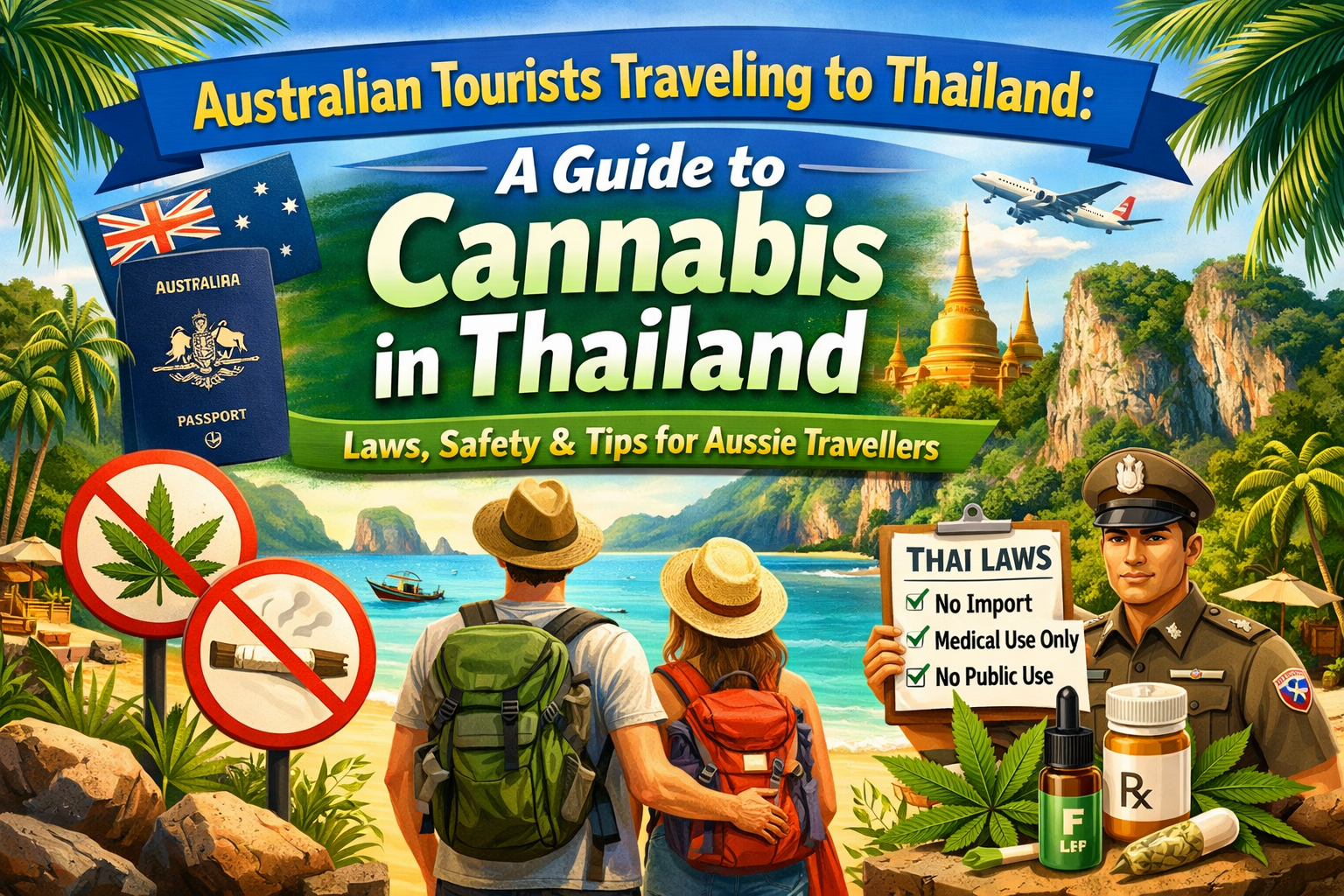
Cannabis in Thailand has been one of the most talked-about topics among Australian travellers in recent years. With Thailand previously making headlines for cannabis reform, however many Australians remain unsure about what is actually legal today. As Australian tourism to Thailand continues to grow, understanding the current cannabis laws is essential to avoid serious legal trouble.
This guide explains cannabis in Thailand in clear, practical terms. It is written specifically for Australian tourists who want accurate information, not rumours or outdated advice. You will learn what is legal, what is risky, and how to stay safe with cannabis in Thailand while enjoying your trip.
Why Cannabis Laws Matter for Australian Tourists
Thailand is one of Australia’s most popular travel destinations. From beaches to food culture, Australian tourism to Thailand has rebounded strongly. However, Thailand’s drug laws remain strict by international standards.
Even small misunderstandings can lead to fines, detention, or worse. Therefore, Australian travellers must understand that cannabis laws in Thailand are not the same as in Australia. A legal medical prescription at home does not automatically protect you overseas.
The Current Legal Status of Cannabis in Thailand
Is Cannabis Legal in Thailand?
Cannabis in Thailand is not freely legal in the way many tourists assume. While cannabis was decriminalised in 2022, the legal framework has tightened significantly since then.
Today, cannabis is treated as a controlled herb under Thai law. This means:
-
- Recreational cannabis use is not clearly legal
-
- Medical use is heavily regulated
-
- Importing or exporting cannabis remains illegal
In practice, enforcement can vary. However, relying on inconsistency is risky.
What Is Clearly Illegal
Australian travellers should be aware of the following absolute restrictions:
-
 Bringing cannabis into Thailand
-
- Taking cannabis out of Thailand
-
- Public smoking or vaping of cannabis
-
- Possession without proper local authorisation
These rules apply regardless of whether cannabis is legal in Australia or prescribed by an Australian doctor.
Can Australian Tourists Bring Medicinal Cannabis to Thailand?
Short Answer: No
Australian tourists must not bring medicinal cannabis into Thailand. This includes:
-
- Cannabis flower
-
- Oils and tinctures
-
- Vapes and cartridges
-
- CBD products containing THC
-
- Seeds or plant material
Thai customs do not recognise Australian prescriptions for cannabis importation. Even CBD products may be considered illegal depending on composition.
This is one of the most important points for how to stay safe with cannabis in Thailand.
Buying Cannabis in Thailand as a Tourist
Is Cannabis Available in Thailand?
In some areas, cannabis appears openly available in shops. However, availability does not equal legality.
Many retail outlets operate in legal grey zones. Enforcement priorities can change quickly. What seems tolerated one week may be targeted the next.
Medical Use and Prescriptions
In theory, medical cannabis is allowed under Thai law. In practice:
-
- Prescriptions must be issued by a licensed Thai medical practitioner
-
- Foreign prescriptions are usually not accepted
-
- Tourists may face difficulty accessing legitimate medical pathways
If you require cannabis for genuine medical reasons, it is safer to consult a Thai medical clinic after arrival rather than bringing medication with you.
Public Use: A Major Risk for Tourists
Smoking or Vaping in Public
Public cannabis use is illegal ain Thailand and therefore is treated as a public nuisance offence. This includes:
-
- Streets and footpaths
-
- Beaches and parks
-
- Hotels and balconies
-
- Bars and nightlife venues
-
- Near temples or schools
Penalties may include fines or detention. Enforcement is discretionary, which increases uncertainty for tourists.
Private Use Is Not Risk-Free
Even private use carries risk. Complaints from neighbours or hotel staff can involve police. Tourists should not assume privacy guarantees safety.
This is a critical point for Thailand cannabis tourism. Visibility increases risk.
Driving and Cannabis in Thailand
Driving after using cannabis is dangerous and illegal. Thailand has strict road safety laws and high accident rates.
Australian tourists should know:
-
- There is no accepted “safe” THC limit
-
- Police can act based on impairment
-
- Penalties can include fines, licence issues, or detention
Never drive after consuming cannabis in Thailand.
Who Is Prohibited From Cannabis Use
Thai regulations restrict cannabis use for certain groups:
-
- People under 20 years old
-
- Pregnant women
-
- Breastfeeding women
These restrictions apply regardless of nationality or purpose of use.
Common Myths About Cannabis in Thailand
Myth 1: “Cannabis is fully legal in Thailand”
This is false. Cannabis is regulated, restricted, and actively monitored.
Myth 2: “Australian medical prescriptions are accepted”
They are not accepted for import or guaranteed recognition locally.
Myth 3: “Tourists are ignored by police”
Tourists are not exempt. In some cases, enforcement is stricter.
How to Stay Safe With Cannabis in Thailand
To reduce legal risk, Australian tourists should follow these guidelines:
Before You Travel
-
- Do not pack cannabis or related products
-
- Check official Thai government and Smartraveller updates
-
- Adjust medical treatment plans if necessary
During Your Trip
-
- Avoid cannabis use entirely if unsure
-
- Never consume in public places
-
- Do not drive after any cannabis use
-
- Do not rely on informal advice from shops or other tourists
Before Returning to Australia
-
- Do not attempt to export cannabis
-
- Dispose of any cannabis legally before departure
-
- Remember Australian customs laws also apply on re-entry
Thailand Cannabis Tourism: Proceed With Caution
Thailand cannabis tourism exists, however it carries real legal risks. Laws are evolving, and enforcement priorities can change without notice.
Australian tourism to Thailand remains strong, but cannabis should not be the focus of your trip. Cultural experiences, food, and natural beauty are safer and more rewarding.